

Breast augmentation continues to be one of the most popular cosmetic procedures worldwide, offering the opportunity to enhance their shape, restore lost volume, and boost overall confidence. Among the available surgical approaches, breast augmentation through nipple, also known as the periareolar technique, stands out for patients who value discreet scarring and highly controlled implant placement.
A more detailed look helps clarify how breast augmentation through the nipple works, the benefits it can offer, and the type of patient who tends to be a good match for this technique. It also helps outline the alternatives available and what someone can expect throughout the surgical process, from preparation to recovery.
What breast augmentation through nipple involves
Breast augmentation through nipple uses a small, curved incision along the outer rim of the areola, where the natural change in pigmentation helps the scar blend in seamlessly. This strategic placement gives surgeons excellent visibility and access during implant insertion, allowing for highly precise adjustments.
The periareolar technique is often recommended for individuals who prioritize minimal scarring, natural-looking outcomes, and refined breast symmetry. However, factors such as the size of the areola and the patient’s breast tissue will determine whether this approach is ideal.
Why many patients choose breast augmentation through nipple
Subtle and well-concealed scarring
The periareolar incision is one of the most discreet methods available. Because scars rest along the natural border of the areola, they often fade to the point of being visually undetectable once fully healed.
Highly accurate implant placement
The incision location offers direct access to the breast tissue, giving a better control during implant insertion. This supports optimal symmetry, improved shaping, and better predictability of final results.
Compatible with most implant types
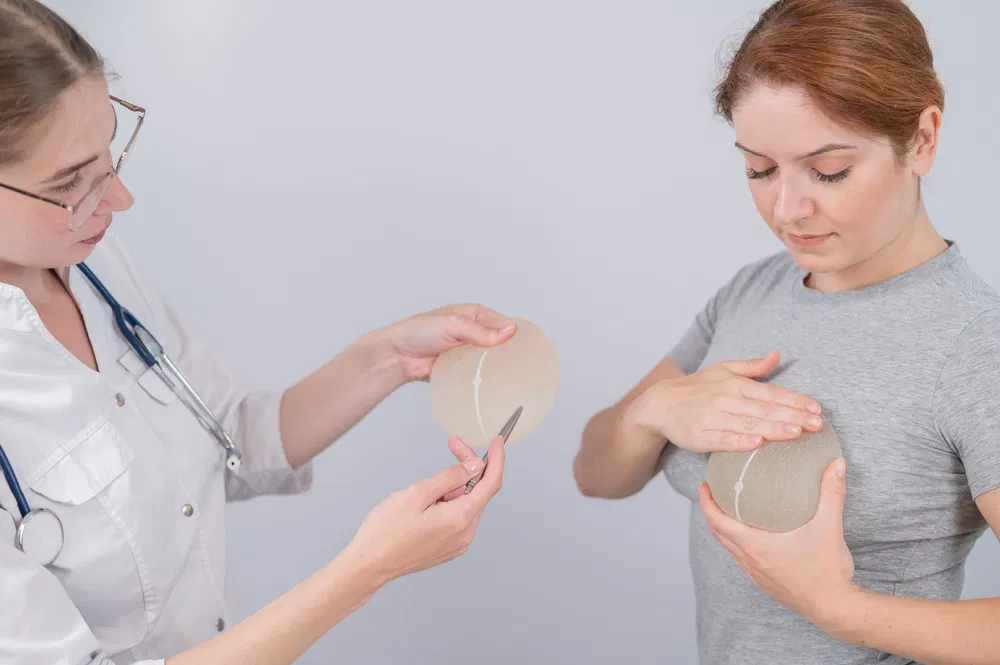
Whether you prefer silicone or saline implants, breast augmentation through nipple accommodates both. This versatility makes it appealing for a wide range of body shapes and aesthetic goals.
Easy access for future adjustments
If adjustments or revisions are needed later, such as implant replacement, repositioning, or capsular contracture correction, the periareolar incision provides a convenient entry point with less disruption to surrounding tissues.
A popular choice among public figures
While celebrities rarely confirm which incision type they choose, it is widely acknowledged within the aesthetics industry that many actresses, models, and media personalities opt for periareolar or inframammary incisions because:
- They minimize visible scars during photoshoots or red carpet appearances
- They support precise, symmetrical results
- They blend naturally and become difficult to detect
This preference has contributed to the periareolar technique’s reputation as a go-to option for those seeking aesthetically refined outcomes.
Who Is a suitable candidate for breast augmentation through nipple
Appropriate areolar size
Because the incision must follow the border of the areola, patients with adequately sized areolas generally benefit more from this approach. Very small areolas may limit the incision space available.
Good skin elasticity and tissue quality
Elastic skin and sufficient breast tissue help ensure natural contours and smooth implantation. These factors also play a role in how the breasts respond during surgery and throughout healing.
Good overall health
Candidates should be nonsmokers or willing to stop smoking before surgery, maintain stable health, and have realistic expectations about what breast augmentation through nipple can accomplish.
Clear aesthetic goals
Ideal candidates have specific goals, enhanced fullness, natural shape, or restored volume, and want an incision option that provides discreet scarring.
How the breast augmentation through nipple procedure Is performed
Consultation and surgical planning
During your initial consultation for breast augmentation through nipple, your surgeon will evaluate your anatomy, review your aesthetic goals, and recommend the most suitable implant type, size, and placement (submuscular or subglandular). This step is crucial in determining whether the periareolar incision is the best choice for you.
Preparation before surgery
Before undergoing breast augmentation through nipple, patients may need to stop smoking, adjust medications, avoid certain supplements, complete necessary lab work, and follow pre-operative fasting guidelines.
During the procedure
- Anesthesia is administered for comfort.
- A precise incision is made along the areola’s outer edge.
- The surgeon creates a pocket for the implant.
- The implant is carefully positioned and adjusted for symmetry.
- The incision is closed with fine sutures that promote minimal scarring.
- This sequence helps create balanced, natural-looking results.
Recovery and follow-up
Recovery includes incision care, wearing a supportive bra, avoiding heavy lifting, and attending follow-up visits. Most swelling subsides within weeks, while final results continue to refine over a few months.
Considerations and potential risks
Infection and healing concerns
As with any surgical procedure, infection is a possibility, although it is relatively uncommon when proper care is followed. Aftercare instructions commonly include cleaning the incision area, avoiding strenuous activities, and attending all follow-up appointments. Adhering to these guidelines plays a major role in minimizing complications and supporting a smooth healing process. Patients with pre-existing medical conditions should disclose them ahead of time, as certain health factors can influence healing speed and overall risk.
Potential changes in sensitivity
Temporary changes in nipple or areolar sensitivity are one of the most frequently discussed considerations with breast augmentation through nipple. Some individuals experience heightened sensitivity, while others may notice a decrease. These changes usually improve over the weeks or months following surgery as nerves adjust and recover. Permanent sensitivity changes are possible but tend to be less common, and discussing your personal risk with your surgeon can help you understand what to expect based on your anatomy.
Breastfeeding considerations
Because the incision is made along the edge of the areola, there is a possibility that milk ducts or nerves involved in breastfeeding may be affected. Some patients maintain full breastfeeding ability, while others may experience difficulty. The impact largely depends on natural breast anatomy and how the incision is performed. If you plan to breastfeed in the future, this is an essential topic to address during your consultation so your surgeon can evaluate whether this technique is the most appropriate choice for your long-term goals.
Alternatives to the nipple-incision technique
If breast augmentation through nipple is not the right fit, other popular incision methods include:
- Inframammary fold incision (IMF)
Placed under the breast crease, offering excellent visibility and versatility for all implant sizes.
- Transaxillary incision
Located in the armpit, leaving no scars on the breasts themselves.
- TUBA (Transumbilical Breast Augmentation)
An incision near the navel through which implants are inserted. Limited to specific implant types.
Choosing a trusted surgeon for breast augmentation
For patients considering breast augmentation in Tijuana, Dr. Victor Sanchez is known for his meticulous technique, commitment to natural results, and patient-centered care. His expertise in breast procedures makes him a strong choice for individuals seeking refined results with minimal scarring. Through detailed consultations and precision-driven execution, Dr. Sanchez ensures patients feel informed and supported throughout their aesthetic journey.